

PUBLICATIONS
Publications & Written Work
Peace Innovation Lab publications document the evolution of peace as a design, data, engineering, and behavior science problem. This archive gathers peer-reviewed research, book chapters, reports, and essays that helped define positive peace as observable engagement across difference boundaries — something that can be designed, measured, tested, and improved over time.
Foundational Works
Peace Data Standard
2018: Frontiers in Psychology
A practical and theoretical framework for using technology to examine intergroup interactions.
Peace Data Standard, Peace Finance, and Peace Engineering
2022: Fundamental Challenges to Global Peace and Security
Advancing the design of respectful spaces and sustainable development goals.
Turban Myths
2013: SALDEF
A behavior design and data-informed study of anti-turban bias and Sikh American identity after 9/11.
SELECTED TITLES
Articles and Thought Pieces
COMPLETE PUBLICATIONS
Quihuis, M. (2025). From concept to ecosystem: The evolution of PeaceTech accelerators (2008–2025). Stanford University
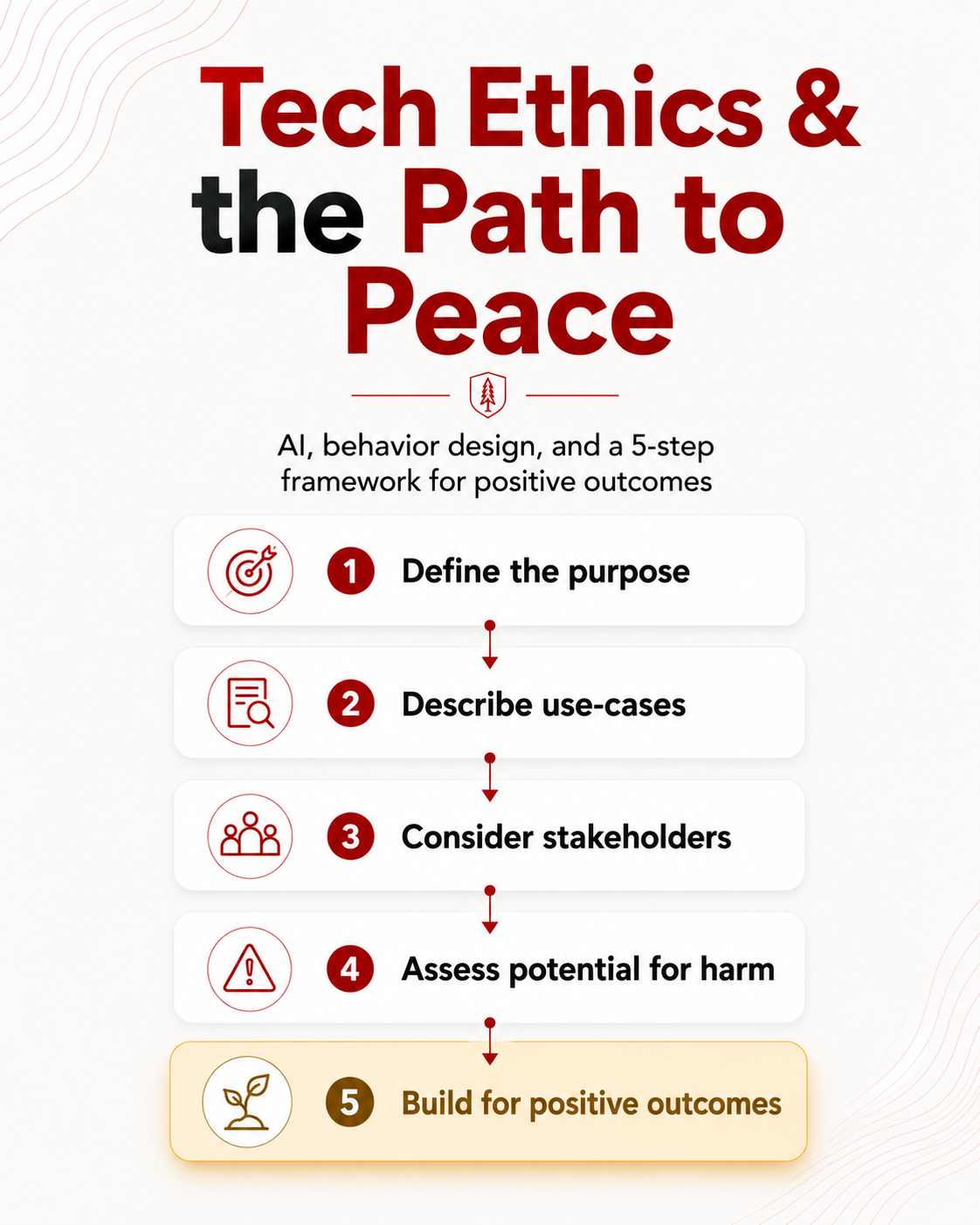
Quihuis, M. (2024). Tech ethics and the path to peace: How AI, behavior design, and ethical frameworks can shape a just future. Medium.
Quihuis, M. (2023). Investing in stability: The untapped potential of peace finance. Medium.
Quihuis, M. (2023). Quantifying positive peace: The imperative for a peace data standard. Medium.
van Kersen, A., Hughes, J.B., Quihuis, M., Nelson, M. (2022). Peace Data, Peace Finance, and Peace Engineering: Advancing the Design of Respectful Spaces and Sustainable Development Goals. In Fundamental Challenges to Global Peace and Security. Palgrave Macmillan.
Jordan, R., Amadei, B., Hughes, J., Koechner, D., Nelson, M., Olson, M., Quihuis, M., Rose, M., Tangorra, J., & Agi, K. (2019). Peace Engineering Consortium: Outcome of the First Global Peace Engineering Conference. Procedia Computer Science (WEEF 2019). Elsevier.
Guadagno, R.E., Nelson, M., & Lee, L. (2018). Peace Data Standard: A Practical and Theoretical Framework for Using Technology to Examine Intergroup Interactions. Frontiers in Psychology, 9:734.
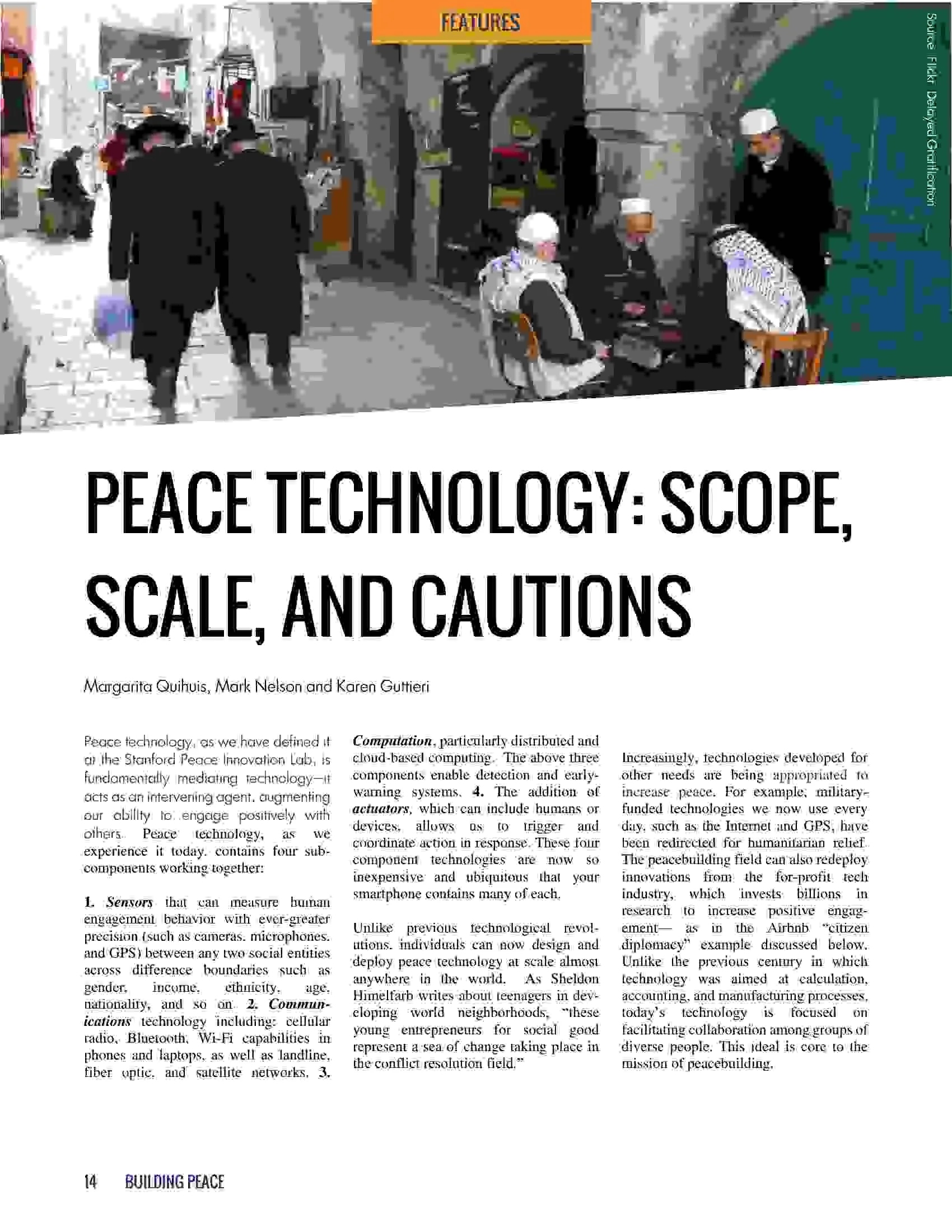
Quihuis, M., Nelson, M., & Guttieri, K. (2015). Peace Technology: Scope, Scale and Cautions. Building Peace, 5, 14–16.
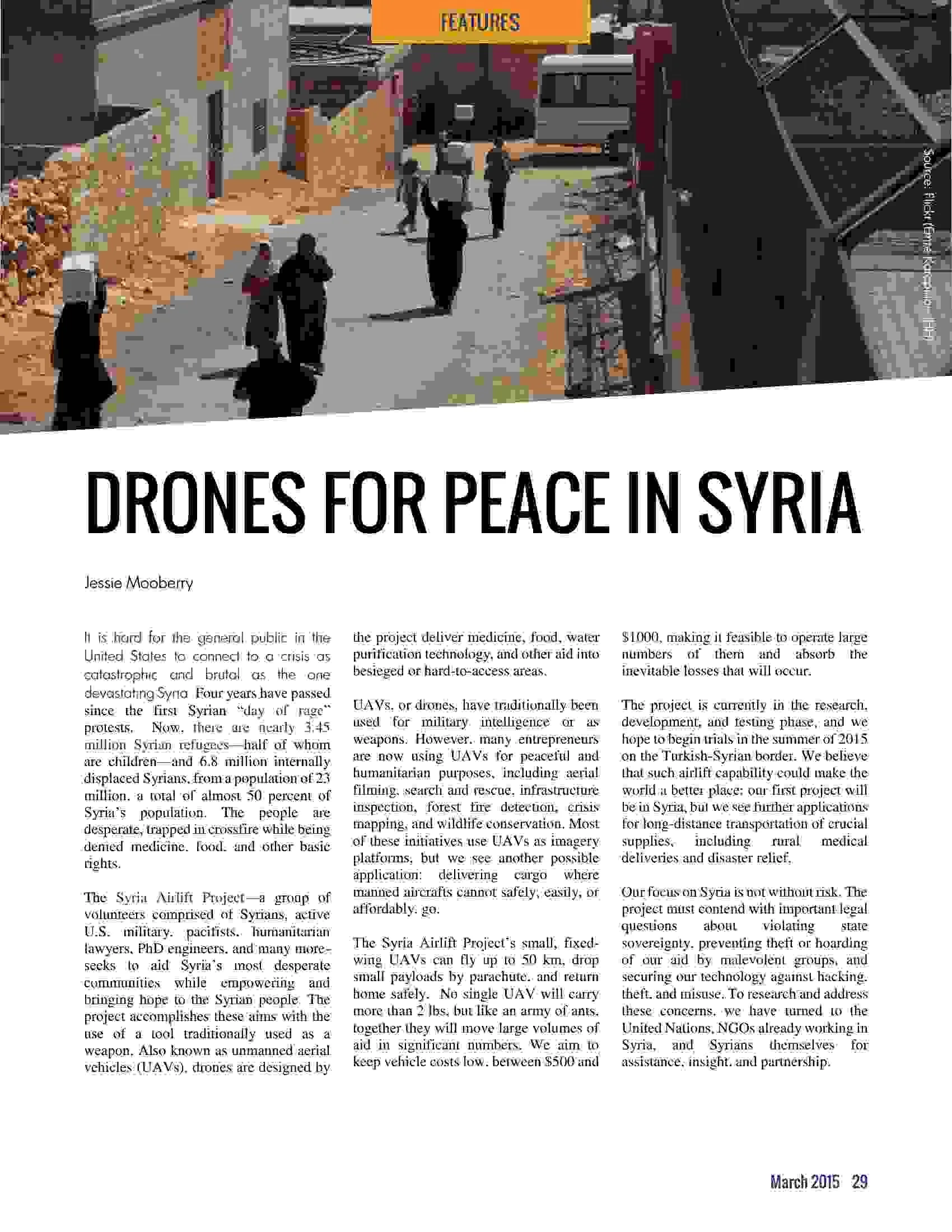
Mooberry, J.(2015). Drones for Peace in Syria. Building Peace, 5, 29-30.
Singh, J., Quihuis, M., Rodriguez, G., & Bennett, C. (2013). Turban Myths: The Opportunities and Challenges for Reframing Sikh American Identity in Post-9/11 America. SALDEF.