FACILITATED DESIGN TOOL
The Peace Canvas
Identify the next behavior that could increase peace across a meaningful difference.
The Peace Canvas helps groups move from broad aspirations-like trust, cooperation, and dignity-to one specific prosocial behavior and the conditions that would make it possible.
Aspiration
Clarify the positive change that matters.
Difference
Identify the meaningful boundary across which engagement must grow.

Next Prosocial Act
Name one observable behavior that would show meaningful movement.
Conditions for Repetition
Design the conditions that make that behavior possible. legitimate, and more likely to happen again.
Why the Peace Canvas exists
Peace is often talked about in big terms-trust, dignity, alignment, participation. But groups rarely agree on what those words require people to do differently.
The Peace Canvas creates a shared surface for making that question concrete. It helps a group identity where difference matters, examine the current quality of engagement. and name one next behavior that could create positive chance
EXAMPLE
Aspiration: “Improve trust”
Behavior: "Respond to employee-raised risks with a visible decision and rationale."
Grounded in the Nelson Engagement Framework
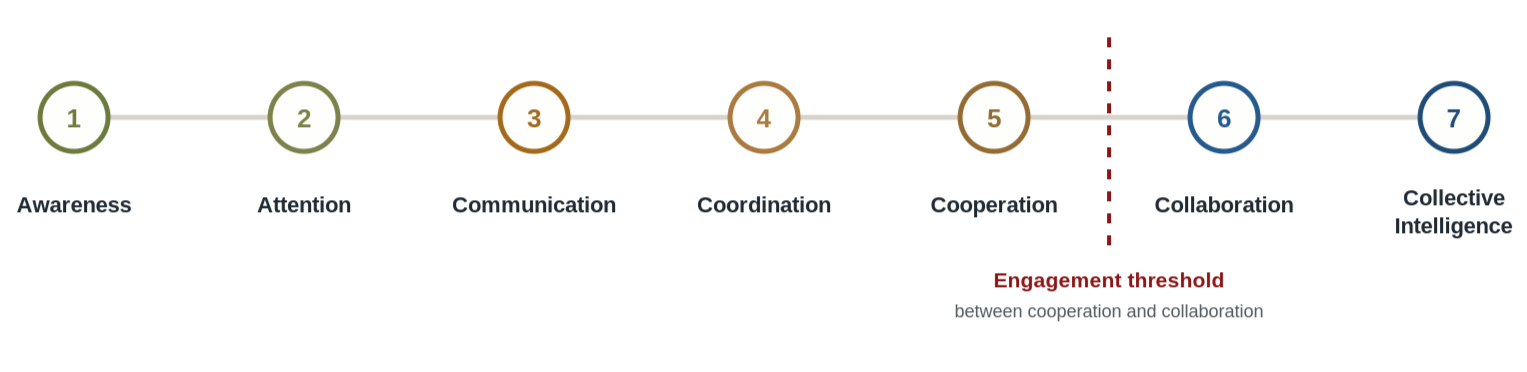
Not all engagement is equal The Nelson Engagement Framework helps groups distinguish the quality of Interaction--from initial awareness to collective intelligence. An honest diagnosis helps you choose the next behavior that can move the system forward.
What participants leave with
A practical starting point
A clearly framed engagement challenge
A named difference boundary and current engagement level
One specific pro-social behavior
A practical direction for continued design or testing
Example in practice: AI adoption inside an organization
The challenge sits between employees experiencing the workflow consequences and leaders controlling the rollout; communication is frequent, but reciprocal action is limited.
Broad Aspiration
Build trust around
Al adoption
Next prosocial act
Employees surface a workflow risk, and an accountable leader responds with a decision and rationale.
Design question
What conditions would
make employees willing
to participate again?
This is illustrative and abbreviated. Real Canvas work is tailored to your context.
Where the Canvas can be used

Organizational change and AI adoption
Institutional trust and legitimacy
Cross-functional collaboration
Civic participation and public service
Cross-sector and stakeholder cooperation
The Peace Canvas Workshop
Bring a real engagement challenge.
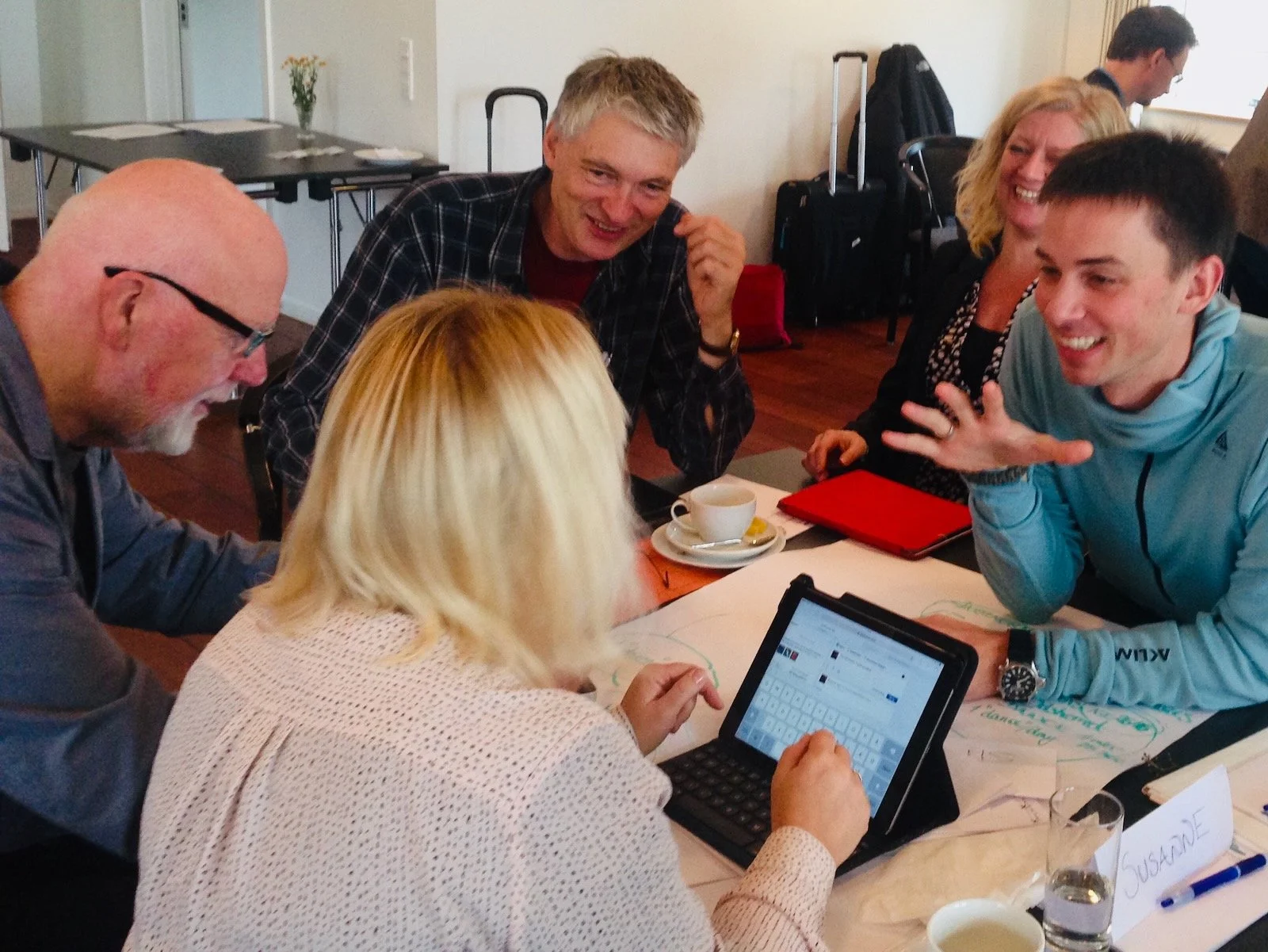
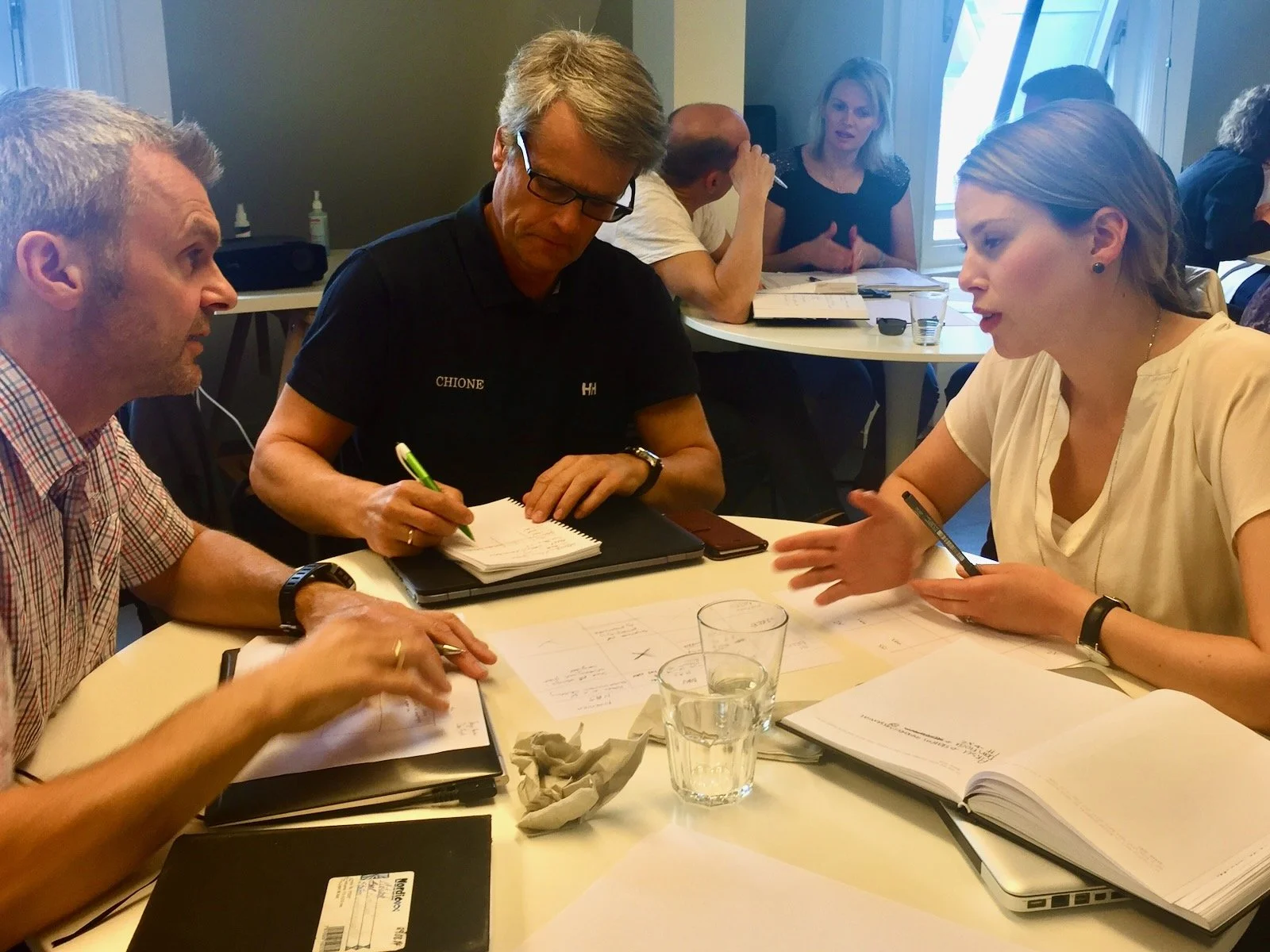
In a facilitated working session, participants use the Peace Canvas to move from a broad aspiration toward one specific behavior they can begin designing around.
Interactive and facilitated
A working session centered on a real engagement challenge.
Grounded in applied behavioral science
Informed by behavior design, engagement theory, and Peace Innovation practice.
Tailored to context
Shapred around the organization, participants, culture, and goals.
Part of a connected body of work
Nelson Engagement Framework
Understand engagement
Diagnose the quality and progression of interaction.
Explore the framework

Peace Canvas
Identify the next behavior
Move from aspiration to a specific prosocial act across difference.
Peace Data Standard
Study change over time
Structure evidence of whether constructive engagement is increasing.
Explore the standard

Frequently Asked Questions
-
The Peace Canvas is a facilitated design tool grounded in the Nelson Engagement Framework. The Framework helps groups understand the quality and progression of engagement. The Canvas helps them apply that understanding to a specific challenge by identifying the next prosocial behavior that could create meaningful movement.
-
It is for teams designing trust, cooperation, belonging, civic participation, responsible AI, organizational collaboration, or other forms of positive engagement across difference.
-
No. The workshop is designed for people working with real organizational, institutional, civic, or cross-sector challenges. Participants do not need prior experience in peacebuilding, behavioral science, or the Nelson Engagement Framework. The facilitation introduces the relevant concepts as they are needed.
-
No. The Canvas is useful wherever people need to work across meaningful differences in role, identity, authority, incentive, expertise, or perspective. Applications can include organizational change, AI adoption, cross-functional collaboration, institutional trust, public service, stakeholder engagement, and cooperation across sectors.
-
The Nelson Engagement Framework provides the Canvas’s diagnostic foundation. It distinguishes awareness, attention, communication, coordination, cooperation, collaboration, and collective intelligence. The Canvas uses that spectrum to help groups assess where engagement is now before deciding what behavior should come next.
-
The Peace Canvas helps a group identify the behavior it wants to increase. The Peace Data Standard provides a more rigorous way to structure evidence about whether that behavior is occurring, becoming reciprocal, and changing over time. Peace Data may be introduced as a follow-on when a team is ready to move from initial design to measurement and learning.
-
Participants leave with a clearer peace-producing outcome, a named difference boundary, an assessment of current engagement, one specific next prosocial behavior, an initial understanding of the conditions and frictions affecting it, and a practical next step for continued design or testing.
-
The Peace Canvas is currently offered as a facilitated method rather than a self-guided toolkit. Working materials are provided to participants within Peace Innovation Lab workshops and organizational engagements. The detailed facilitation process, prompts, and supporting methods are not publicly distributed.
-
Begin by sharing the engagement challenge your group is facing through the Contact and Collaborate page. Peace Canvas sessions are adapted to the organization, participants, culture, and goals rather than delivered as a generic workshop.